01
Prioritise brownfield land first
Build on ageing industrial sites and under-used estates before clearing mature forest. A full public list of brownfield sites considered — and why they were rejected — has never been published.
Our Position
We are not against housing. We are against being told this is a choice between homes and forest when it isn't. Singapore has built flexibly and creatively before — and it can here. Avoidance is possible.
A better way to build
What we're asking for
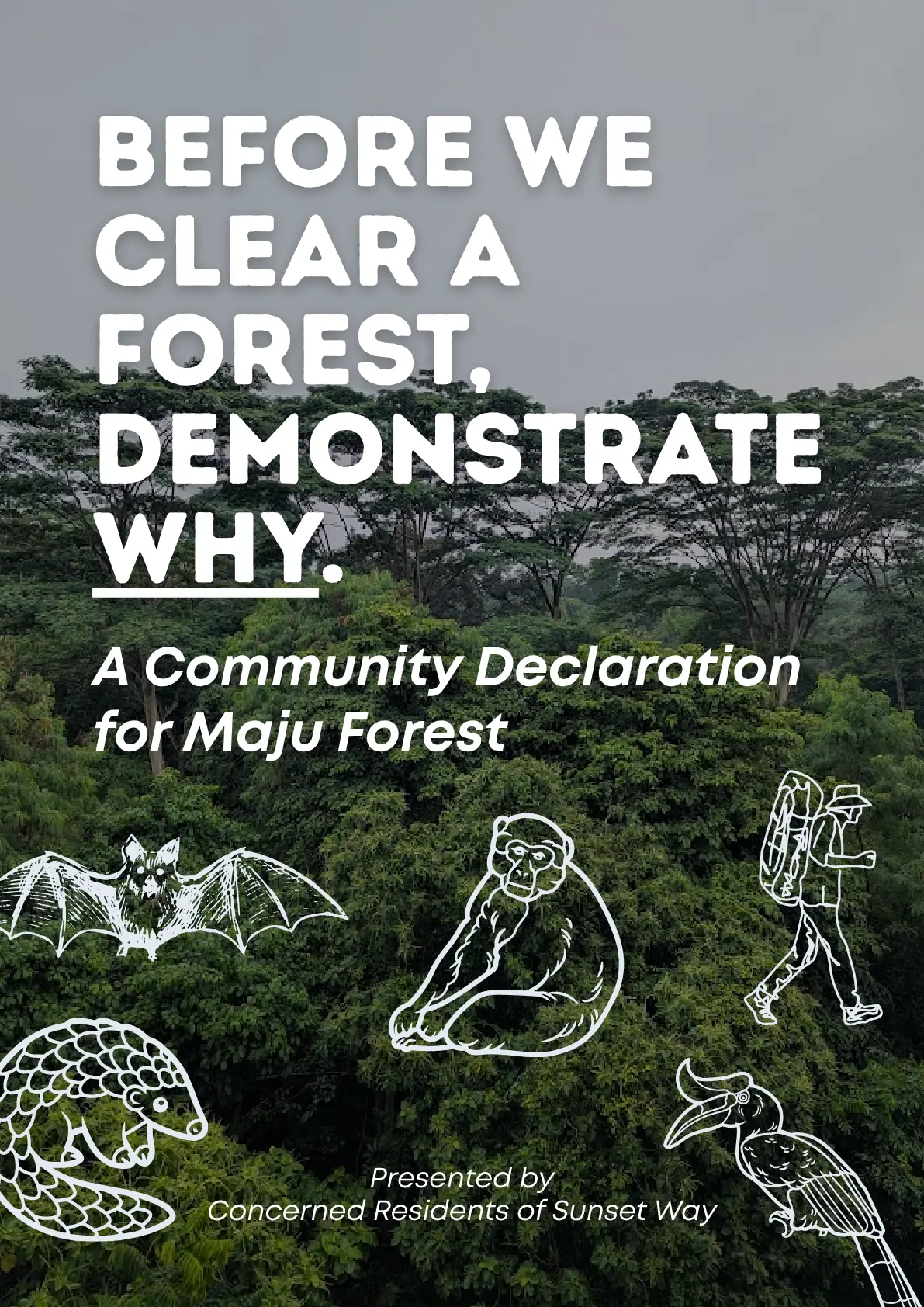
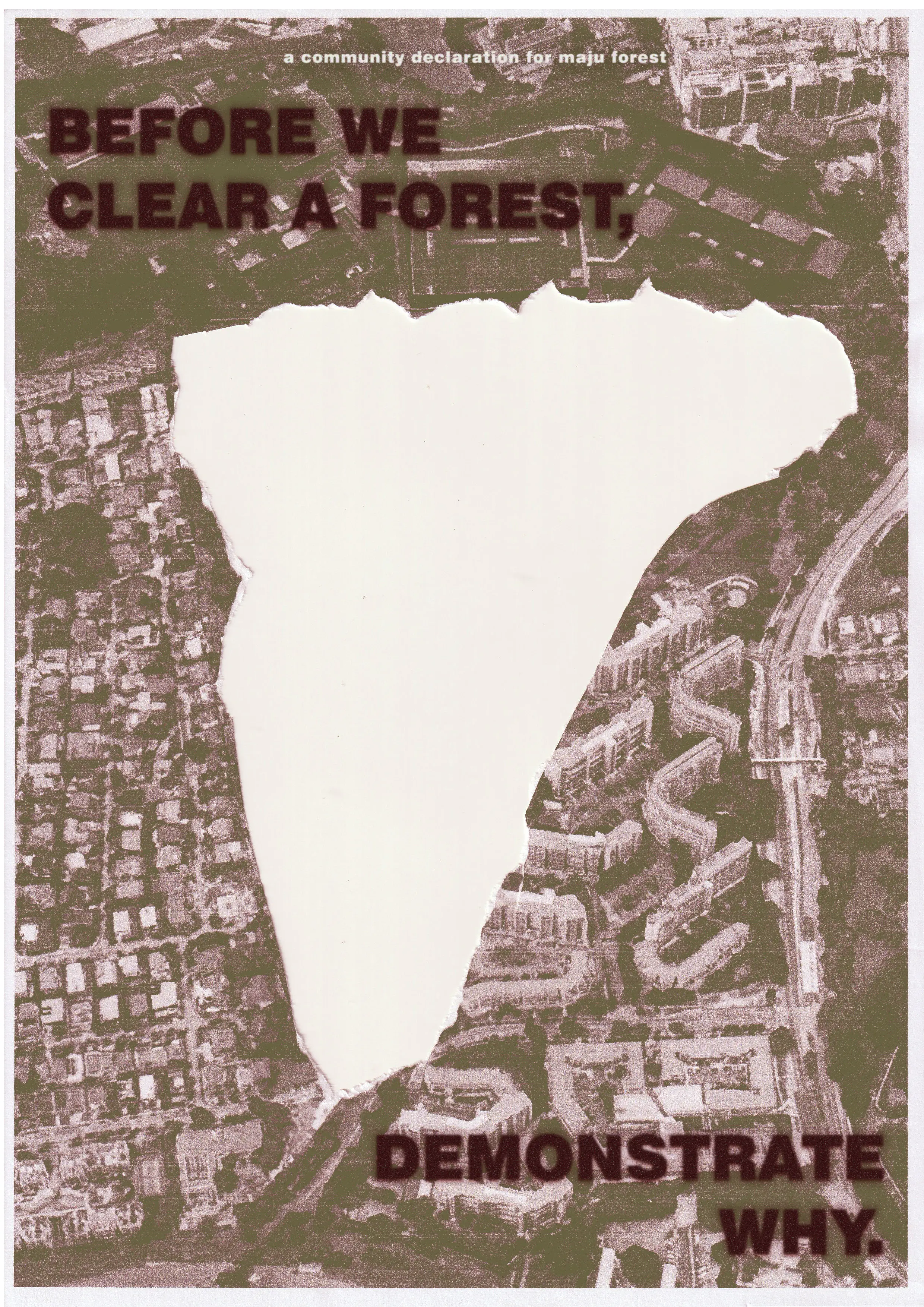
From A Community Declaration for Maju Forest, by concerned residents of Sunset Way. To answer one question honestly — does it really have to go? — we call for three things.
The EIA was rushed through in four months without assessing the social and community impacts of clearing Maju — urban heat, flood hazard, community health. It identifies biodiversity impacts as “Major Negative” even after mitigation, and the Critically Endangered Sunda pangolin, recorded in an earlier EIA, went unrecorded this time. An assessment should not simply tell us how to make destruction less harmful — it must first establish whether destruction is necessary at all.
We call for a comprehensive Environmental and Social Impact Assessment (ESIA) that fills the gaps and duration of the current one and properly considers:
The EIA feedback window was open for just 27 days — digital-only, English-only, on a poorly designed form. That is not meaningful engagement if people cannot understand the information, take part, or know what happens to their feedback. Everyone deserves to know; everyone deserves to be heard. Engagement like this must come before irreversible decisions, not after — and set a precedent for every future development on forested land.
We call for the feedback process to be reopened and expanded to include:
We've been told brownfield alternatives were considered, and that other viable sites will be developed “in the coming years.” But if clearing a forest is the necessary choice, the public deserves to understand why — and why now. Transparency is more than releasing documents: it means making the reasoning behind an irreversible decision understandable to the people affected by it.
Show us the evidence:
The standard
We should not have to fight forest by forest, asking the same questions each time. Gillman, Tagore-Springleaf, Ulu Sembawang and more face the same fate. These principles should become the standard for every development that risks significant deforestation.
Avoidance should neither depend on public outcry nor media coverage. It should be the standard for all our green spaces.
Our principle
It is an ask for better planning — real care and attention for our natural spaces, and every alternative and avoidance strategy weighed before greenlighting such drastic deforestation. We are asking Singapore to build for a future it would be proud of.
A resilient city needs more than good buildings — especially in a climate crisis. It needs living ecosystems, biodiversity, trees, water, shade, and communities that thrive alongside development.
When faced with irreversible environmental loss, the first question should not be how we mitigate it — but how we avoid it.
Before we clear a forest, demonstrate why we have to. We should not have to lose Maju Forest too, to learn the value of what remains.
Agree? Add your voice.